Evaluating Elephant Watercolor Clipart for Embroidery
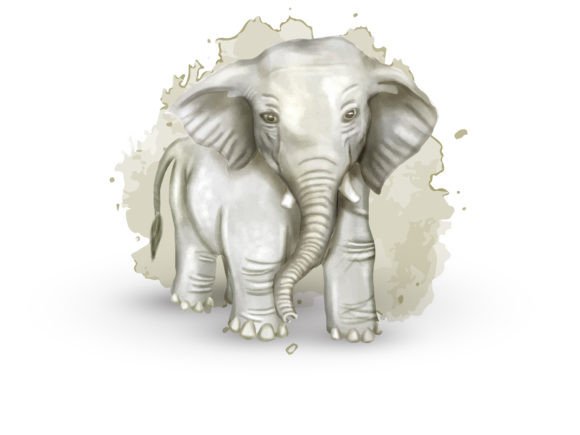
When I first opened the Elephant Watercolor Clipart Illustration, my immediate reaction was not just about its aesthetic charm, but about its translatability to thread. As a designer who bridges the gap between digital art and tangible textiles, I look at illustrations differently than a graphic designer might. I am looking for stitch paths, color blending potential, and structural integrity. This particular elephant illustration possesses a softness and organic flow that is visually stunning on screen, but it demands a thoughtful approach when converting it into a machine embroidery design. The watercolor style implies gradients, transparency, and fluid edges, which are beautiful in print but require specific digitizing strategies to replicate with satin stitch, fill stitch, and running stitch techniques.
Translating Soft Edges to Thread Texture
The primary challenge and opportunity with this Elephant Watercolor Clipart Illustration lies in capturing that signature watercolor bleed without creating a dense, bulletproof patch of thread. In my recent project preparing a custom embroidered tote bag for a boutique client, I had to evaluate whether this design would maintain its delicate personality on canvas. Watercolor art relies on negative space and light passing through pigment; embroidery relies on layering thread on top of fabric. To make this work, the digitized version cannot simply be an auto-trace. It requires intentional underlay and varied stitch angles to mimic the wash of color.
For the tote bag project, I found that treating the elephant’s form with a lighter stitch density was crucial. If you pack the fill stitches too tightly in an attempt to match the digital opacity, you lose the watercolor effect and risk distorting the natural drape of the bag. Instead, utilizing a textured fill stitch with slight gaps allows the fabric texture to contribute to the design, simulating the paper grain often seen in watercolor paintings. This approach preserves the artistic intent while ensuring the finished product remains functional and soft to the touch.
Ideal Applications for Nursery and Apparel
This illustration naturally gravitates toward specific markets. Based on the mood and composition, the Elephant Watercolor Clipart Illustration is exceptionally well-suited for baby embroidery and nursery decor. The gentle lines and typically pastel or muted color palettes associated with watercolor elephants evoke safety, whimsy, and tenderness. When planning a line of personalized gifts, such as embroidered blankets or bibs, this design offers high perceived value because it feels hand-painted rather than mass-produced.
For Etsy sellers and small shop owners focusing on custom apparel, this design performs beautifully on sweatshirt embroidery and lightweight tees. However, the placement matters. Unlike bold, blocky logos, this illustration benefits from being treated as a piece of art rather than a brand mark. Center chest placements or lower hem accents allow the design to breathe. I have also seen great success using similar watercolor animal motifs for holiday embroidery on stockings, where the soft aesthetic contrasts nicely with traditional velvet or linen fabrics. For commercial embroidery businesses, offering this style differentiates your catalog from standard corporate logos, attracting clients looking for boutique-style merchandise.
Navigating Fabric Limitations and Stabilizer Choices
While versatile, the Elephant Watercolor Clipart Illustration requires careful consideration regarding fabric selection. Watercolor designs often involve subtle shading that can get lost on highly textured fabrics like terry cloth or heavy fleece. The intricate details needed to suggest a brushstroke may sink into the pile, rendering the design muddy. Conversely, on very thin or stretchy fabrics like jersey knit, the multiple thread layers required for color blending can cause puckering if not properly supported.
In my testing, using the correct stabilizer was non-negotiable. For a sweatshirt, a medium-weight cutaway provided enough stability to handle the stitch count without adding excessive bulk. For lighter items like tea towels or pillow covers, a tear-away might suffice, but only if the stitch density has been optimized for lighter weight. I strongly advise against attempting this design on curved surfaces like caps unless you have a specialized cap frame and significant experience; the flat, expansive nature of most watercolor illustrations fights against the curvature of a hat brim, leading to registration issues where the outline separates from the fill.
Technical Considerations for Digital Conversion
If you are purchasing this as a digital embroidery file or hiring a digitizer to convert the clipart, communication is key. You must verify the hoop size requirements before starting. Watercolor illustrations often have sprawling, organic shapes that do not fit neatly into standard square hoops. Ensure your machine can accommodate the full span of the elephant’s trunk and ears without requiring re-hooping, which introduces alignment risks. Additionally, check the thread colors chart. A true watercolor effect may require 15 to 20 thread changes to achieve smooth gradients. If your production timeline is tight, you may need to request a simplified version that uses fewer colors while retaining the overall impression.
It is also vital to inspect small details. Elements like eyelashes, toe nails, or fine spray effects in the original Elephant Watercolor Clipart Illustration may need to be exaggerated or removed during digitizing. Running stitch lines thinner than 1mm often fail to register clearly on fabric and can cause needle breaks or thread shredding. Always review the design in a black and white mockup first; if the contrast and definition hold up without color, the structure is sound. If it looks like a gray blob in monochrome, the stitch types need adjustment regardless of how pretty the colored preview looks.
Professional Standards for Selling Finished Goods
For creative entrepreneurs integrating this illustration into their business, professionalism extends beyond the stitch out. Before listing any handmade product featuring this design, confirm the licensing terms. Just because you bought the clipart does not automatically grant commercial rights for machine embroidery resale. Protect your craft business by verifying you can legally sell finished items or use the image in printable mockups for your listings.
Furthermore, test the design on scrap fabric identical to your final product before committing to a customer order. Check thread color contrast against both light and dark backgrounds, as watercolor tones can shift dramatically depending on the base material. A pale blue wash might vanish on white cotton but sing on cream linen. Document your stabilizer and needle choices for consistency. When customers receive a personalized gift or custom apparel item, they are paying for the durability and clarity of the embroidery as much as the design itself. By treating the Elephant Watercolor Clipart Illustration with technical respect and practical foresight, you ensure that the final embroidered piece honors the original artistry while standing up to real-world use.