Owl in Winter Watercolor: An Embroidery Review
As a professional embroidery designer and product reviewer, I approach every new digital asset with a critical eye. When evaluating the Owl in Winter Watercolor Clipart Bundle for potential use in machine embroidery design, my first thought is always about translation. How does this soft, painted illustration convert into thread? Watercolor styles are notoriously tricky to digitize because they rely on transparency and blending that traditional satin stitch or fill stitch patterns struggle to replicate. However, after reviewing these illustrations, I see significant potential for specific handmade product lines, provided the digitizer understands how to interpret the artwork rather than just trace it.
First Impressions and Seasonal Mood
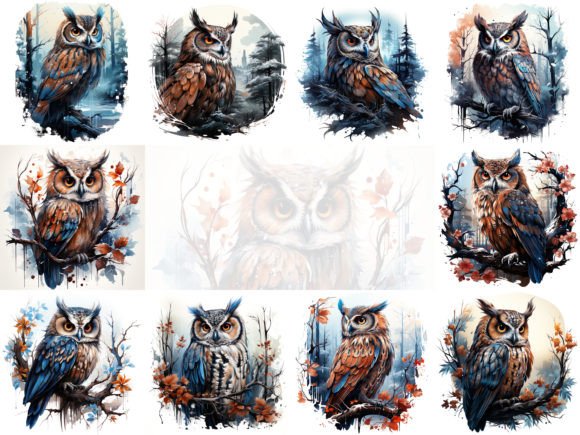
The visual personality of this bundle immediately evokes a cozy, nostalgic winter aesthetic. The owl is not cartoonish or overly juvenile; it possesses a gentle sophistication that appeals to both nursery decor buyers and adult gift shoppers. For an Etsy seller or small shop product line, this mood is valuable. It avoids the generic clipart look that saturates the market. The shape of the owl is rounded and contained, which is excellent news for hooping. Unlike sprawling designs with erratic edges, this composition sits well within standard hoop sizes, minimizing fabric waste and stabilizer usage.
From a design perspective, the level of detail suggests a need for careful color mapping. The watercolor effect implies gradients that cannot be achieved with solid thread colors alone. To make this work as a finished product, the embroidery file must utilize thread blending techniques or textured fill stitches to mimic the painterly quality. If you are purchasing this as a pre-digitized machine embroidery design, inspect the stitch density closely. If it is raw art intended for custom digitizing, prepare to spend time creating underlay that supports the lighter, watery areas without causing puckering on the fabric texture.
Real-World Application: The Custom Sweatshirt Test
To truly evaluate this asset, I mentally placed it in a real-life scenario: preparing a custom embroidered sweatshirt for a holiday boutique collection. Sweatshirts are high-value items for craft business owners, but fleece and French terry fabrics present challenges. The pile of the fabric can swallow fine details, and the stretch requires robust stabilization.
In this context, the Owl in Winter Watercolor Clipart Bundle shines if adapted correctly. For a crewneck sweatshirt, I would position the design slightly off-center or scaled down on the chest to maintain a modern, boutique feel. The winter theme makes it perfect for holiday embroidery, but the neutral palette ensures it remains wearable through February and March. Customers react positively to designs that feel artistic rather than mass-produced. This owl has enough character to serve as a signature piece for personalized gift sets, perhaps paired with a matching tote bag design or baby embroidery item.
However, success depends on execution. On a sweatshirt, I would avoid tiny running stitch outlines that define the watercolor edges. Instead, I would rely on contrast between thread colors and the garment base to define the shape. This reduces stitch count and prevents the design from becoming bulletproof or stiff, preserving the drape of the custom apparel.
Navigating Fabric Limitations and Hoop Sizes
While versatile, this design requires careful placement. There are specific scenarios where I would advise caution. Detailed corners and subtle shading in watercolor illustrations often get lost on highly textured fabrics like linen tea towels or burlap. While the rustic vibe matches, the stitching clarity may suffer. Similarly, dark fabrics pose a challenge. Watercolor relies on light passing through layers; on black or navy cotton, you lose that luminosity unless you stitch a white underlay base first, which adds density and production time.
Stretchy fabrics and curved surfaces like caps demand extra attention. The rounded shape of the owl is cap-friendly, but only if the stitch density is managed. A dense fill stitch meant to simulate paint will cause distortion on a structured hat. For caps, I would simplify the design, focusing on the silhouette and key features rather than the full watercolor gradient. Always confirm your hoop size before committing to a layout. Scaling down too aggressively to fit a 4x4 hoop might turn delicate brushstrokes into unrecognizable blobs. Conversely, scaling up for a large pillow cover requires checking that the stitch count doesn't exceed commercial embroidery machine limits or home machine capabilities.
Impact on Brand Consistency and Customer Trust
For creative entrepreneurs, using cohesive design assets builds brand recognition. The Owl in Winter Watercolor Clipart Bundle offers a consistent style that can anchor a seasonal collection. Whether applied to an apron, kitchen towel, or nursery blanket, the recurring motif creates a professional narrative. Buyers trust shops that curate their aesthetics intentionally. A disjointed mix of clipart styles screams amateur, whereas a unified watercolor theme signals a thoughtful handmade product line.
This consistency extends to digital presentation. Before stitching a single sample, use printable mockups to test the design against various backgrounds. Does the owl pop on cream fleece? Does it vanish on heather grey? Testing in black and white mockups helps identify value contrast issues that color monitors hide. High-quality mockups also boost buyer engagement in listings, allowing customers to visualize the personalized gift before purchase. This step is crucial for Etsy sellers who want to minimize returns and maximize perceived value.
Essential Designer Notes for Production
Before adding this to your production queue, adhere to these practical checks to ensure professional results:
- Test on Scrap Fabric First: Never run a new embroidery project directly on a sellable item. Stitch out the design on the exact fabric and stabilizer combination you plan to use. Watercolor styles are sensitive to tension issues.
- Verify Licensing Terms: Confirm whether the license covers commercial embroidery, digital resale, or both. Some bundles allow finished product sales but prohibit sharing the digital embroidery file. Protect your craft business by reading the fine print.
- Check Thread Color Contrast: Ensure your chosen thread colors have enough separation to read as distinct shapes. In watercolor emulation, adjacent shades can blend into mud if the contrast is too low.
- Review Stitch Density: Inspect the file for overly dense areas that could damage thin fabric or cause needle breaks. Adjust pull compensation if necessary to account for fabric push-and-pull.
- Evaluate Small Details: If the design includes tiny lettering or intricate feather details, verify they remain legible at your intended size. Running stitch text below 4mm often fails on textured materials.
- Stabilizer Selection: Match the stabilizer to the fabric weight. Cut-away is generally safer for stretchy custom apparel, while tear-away may suffice for stable woven goods like pillow covers.
- Mockup Validation: Compare the design on both light and dark fabric backgrounds digitally. This reveals whether additional underlay or outline adjustments are needed for versatility.
Final Thoughts on Value and Versatility
The Owl in Winter Watercolor Clipart Bundle represents a strong opportunity for makers who understand the nuances of translating art into thread. It is not a plug-and-play solution for every fabric type, but for those willing to test and adjust, it offers a pathway to elevated, emotionally resonant products. Whether you are creating a bespoke baby embroidery keepsake, a seasonal sweatshirt line, or unique holiday gifts, the key lies in respecting the medium. By prioritizing stitching clarity over pixel-perfect replication, you honor both the original illustration and the tactile nature of embroidery. Always validate your specific embroidery file parameters and machine compatibility before beginning, as technical specs vary between digitizers. With proper preparation, this design can become a profitable and beloved staple in your creative repertoire.